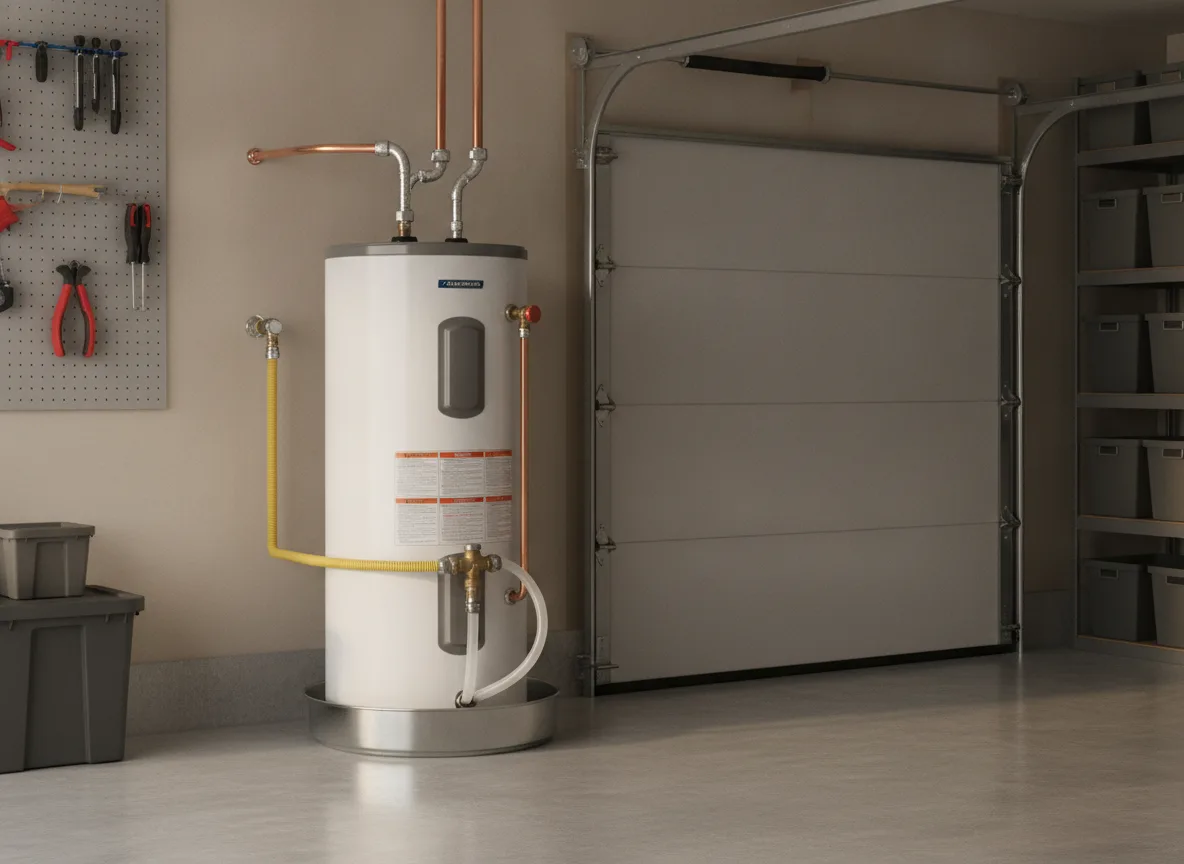
On a gas heater, look at the pilot light — if it's out, that alone explains no hot water. On an electric one, check the breaker and the reset button on the upper thermostat panel. Either can be the whole problem, and both are free to check before anyone comes out.
These are the patterns a plumber will ask about:
Age is the deciding factor. A tank under roughly eight years old with a failed part is usually worth repairing. Past ten to twelve, repairs stop making sense — you spend money on a unit likely to fail anyway. If the leak is from the tank body rather than a fitting, the tank is finished regardless of age; that is not a repairable failure.
Water in this area carries meaningful mineral content, and that sediment settles in the bottom of a tank. It's the usual reason for rumbling noises and shortened tank life here. Flushing the tank annually genuinely helps, and it's something a plumber can do on a service visit.
Eight to twelve years for a conventional tank is typical. Tankless units often run longer. Hard water shortens both.
A leak from the tank body means the tank has corroded through and should be replaced. Water near a gas burner or electrical connections is a genuine hazard — shut off water and gas or power to the unit.
Some homeowners do. The risk is that an old drain valve fails open and won't reseal, turning a maintenance job into an emergency. On a tank that's never been flushed, having a plumber do it is the safer call.
Send the details and we'll route it to a licensed local contractor. Free, no obligation.